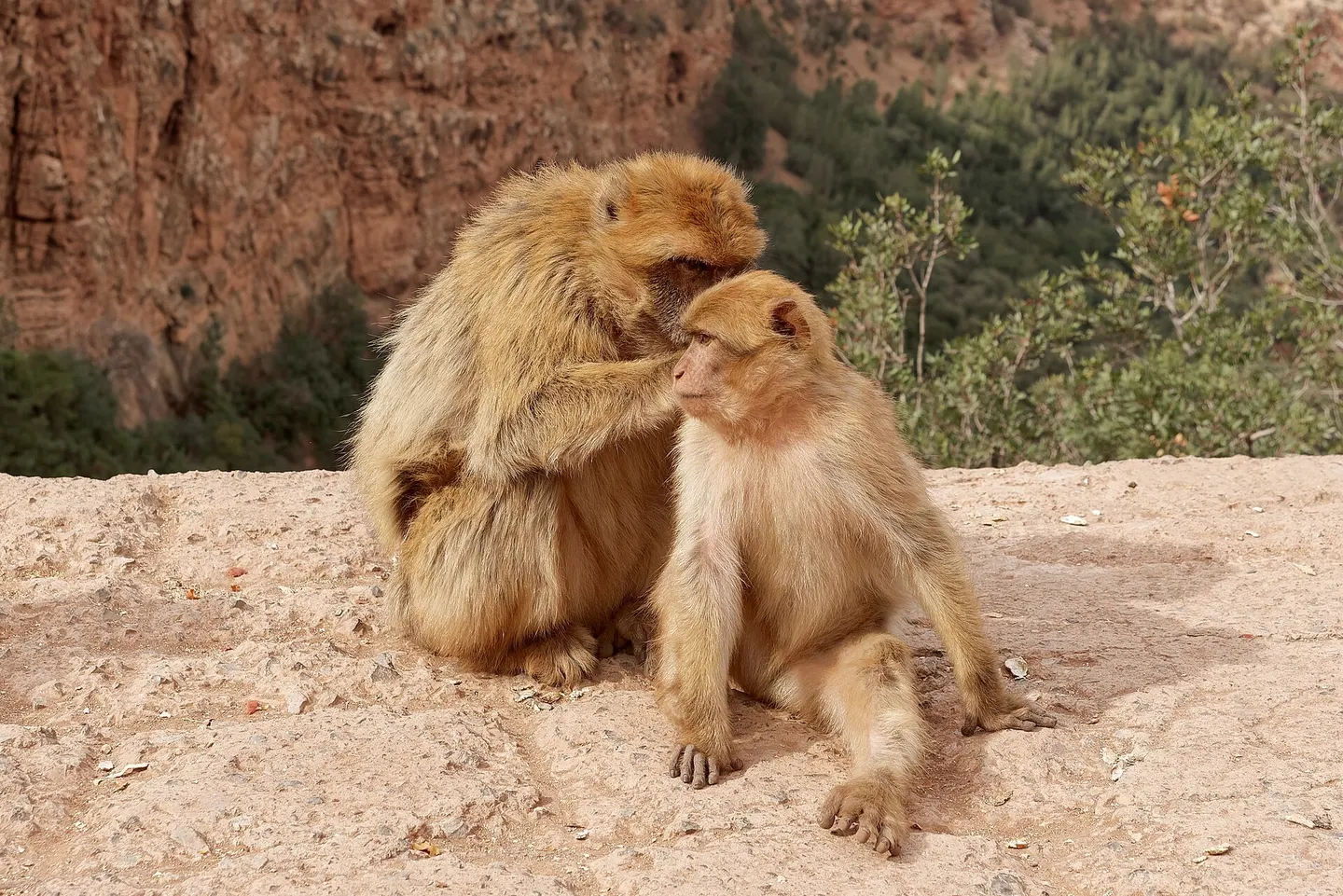
The monkeys at Ouzoud Falls are Barbary macaques (Macaca sylvanus), the only macaque living outside Asia. The species is listed as ‘endangered’ on the IUCN Red List (2020 assessment) and on Appendix I of CITES; some 10,000 to 12,000 are thought to remain in Morocco according to Wikipedia. At Ouzoud, a study carried out from 2007 to 2012 found that human food accounts for 21% of the feeding time of the group followed. A sign asks visitors not to feed them: keep your bags closed and stay a few metres away.
Key facts
- Barbary macaque, listed as ‘endangered’ by the IUCN (2020 assessment), CITES Appendix I.
- 10,000 to 12,000 Barbary macaques in Morocco according to Wikipedia; males about 17 kg, females about 13 kg.
- At Ouzoud, 21% of the studied group's feeding time goes on human food (2007 to 2012 study).
- Seeing them is free: they gather on the path down, in the olive trees and near the lower terraces.
Key facts
| Fact | Detail |
|---|---|
| Species | Barbary macaque (Macaca sylvanus) |
| IUCN status | endangered (2020 assessment), after being listed as vulnerable |
| International protection | CITES Appendix I |
| Population in Morocco | 10,000 to 12,000 animals |
| Weight | about 17 kg for a male, 13 kg for a female |
| Human food at Ouzoud | 21% of feeding time (2007 to 2012 study) |
Source: Wikipedia (French and English), El Alami and Chait (Revue de primatologie).
Which monkey lives at Ouzoud Falls?
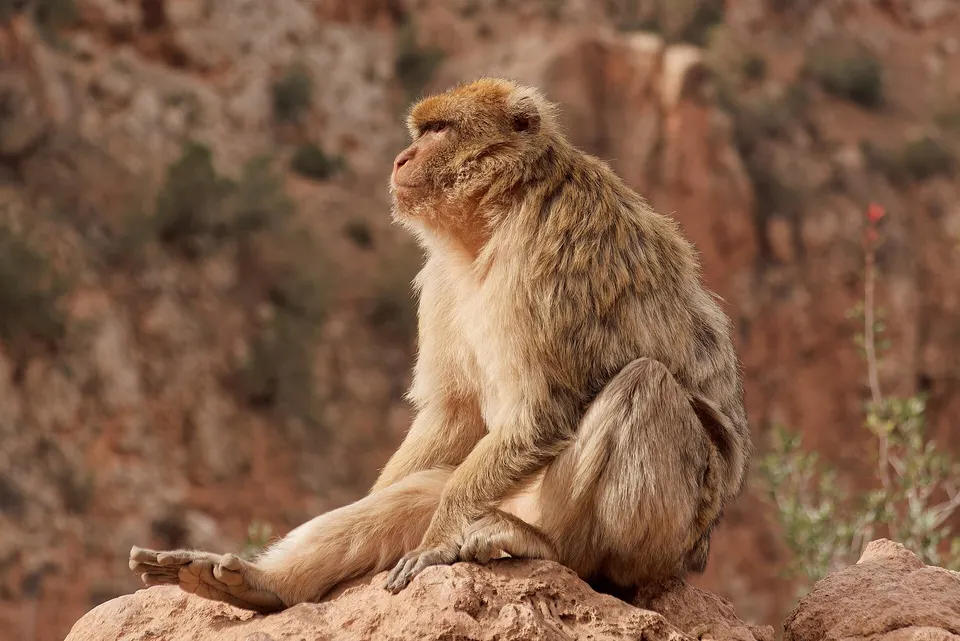
The Ouzoud monkeys are Barbary macaques, also called Barbary apes in English. It is the only macaque living outside Asia: it is found in the mountain forests of Morocco and Algeria, between about 800 and 2,200 m, and in a small introduced population in Gibraltar (nearly 300 animals). It has practically no tail and a thick yellowish-brown coat, and lives in groups of 12 to 59 according to Wikipedia (24 on median). Females stay in their birth group all their lives; males often leave it at puberty.
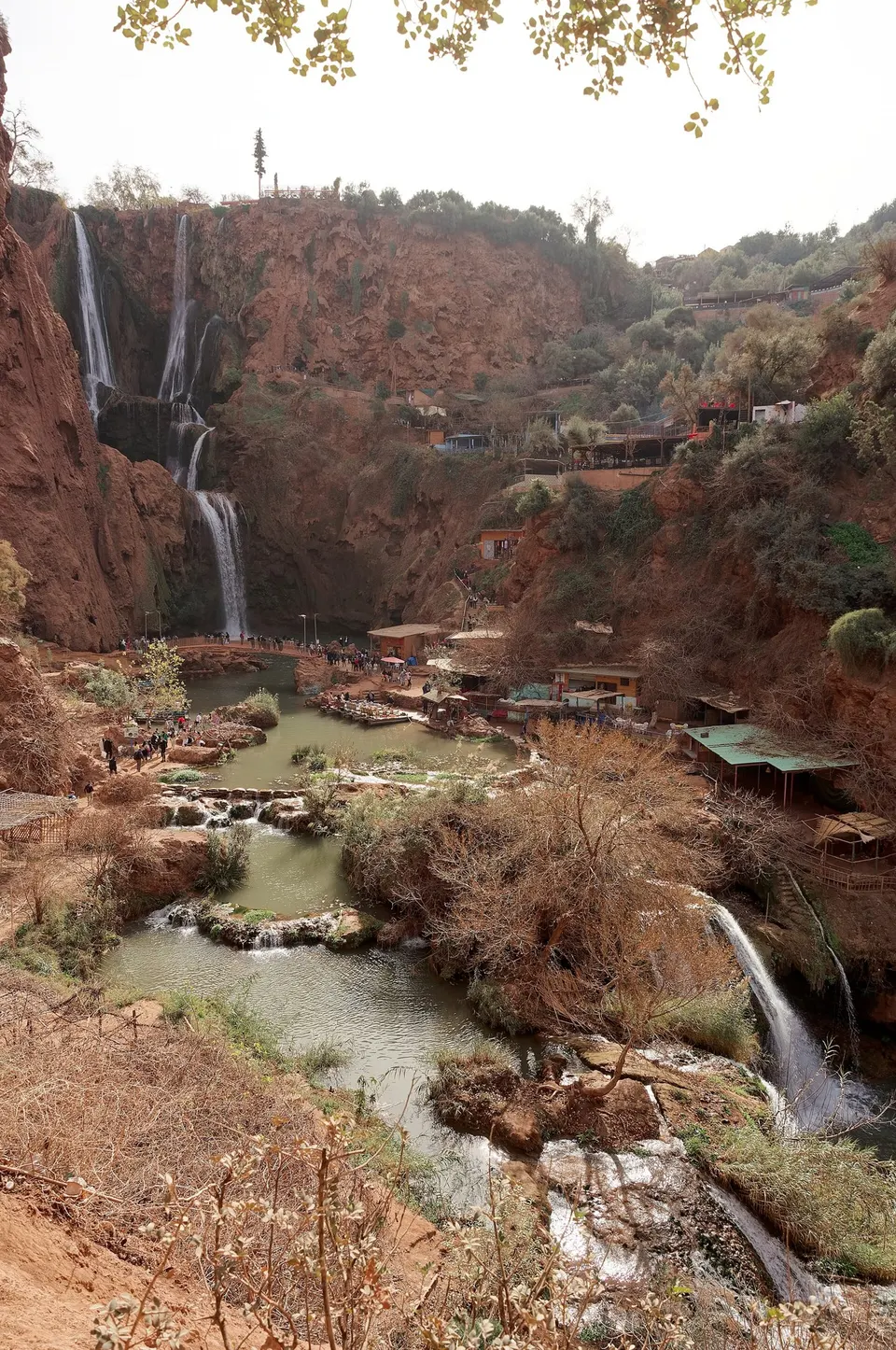
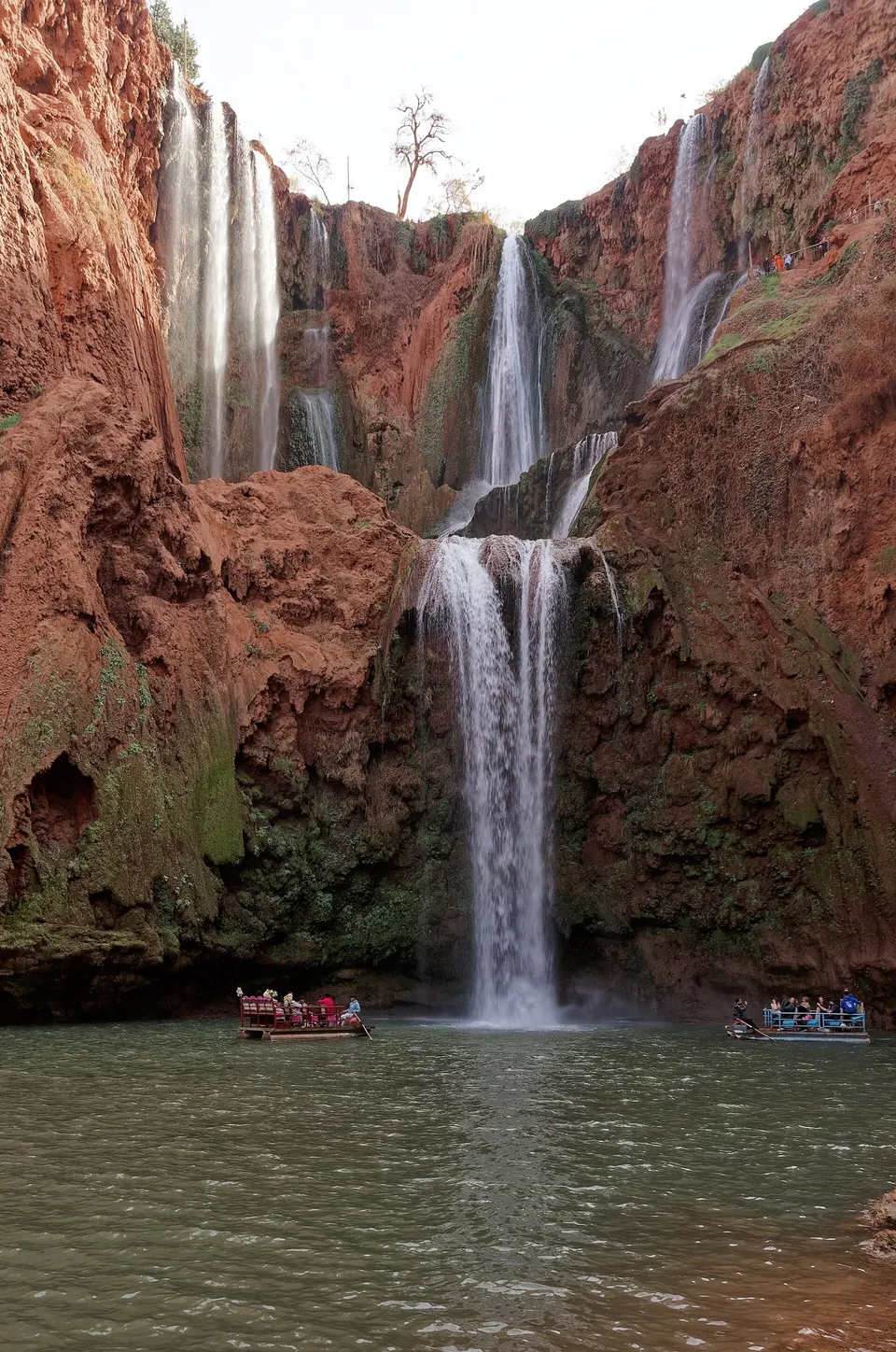
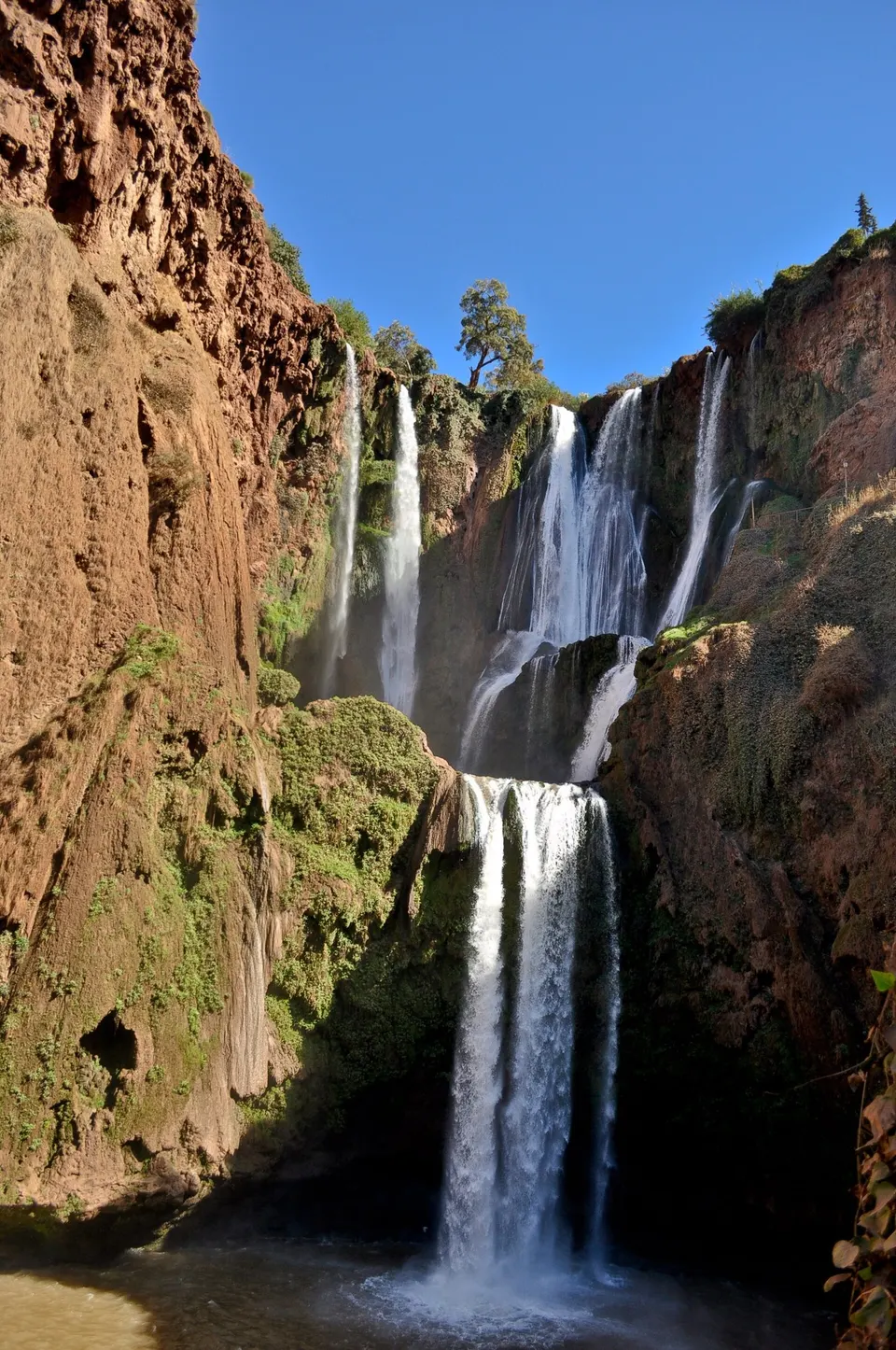
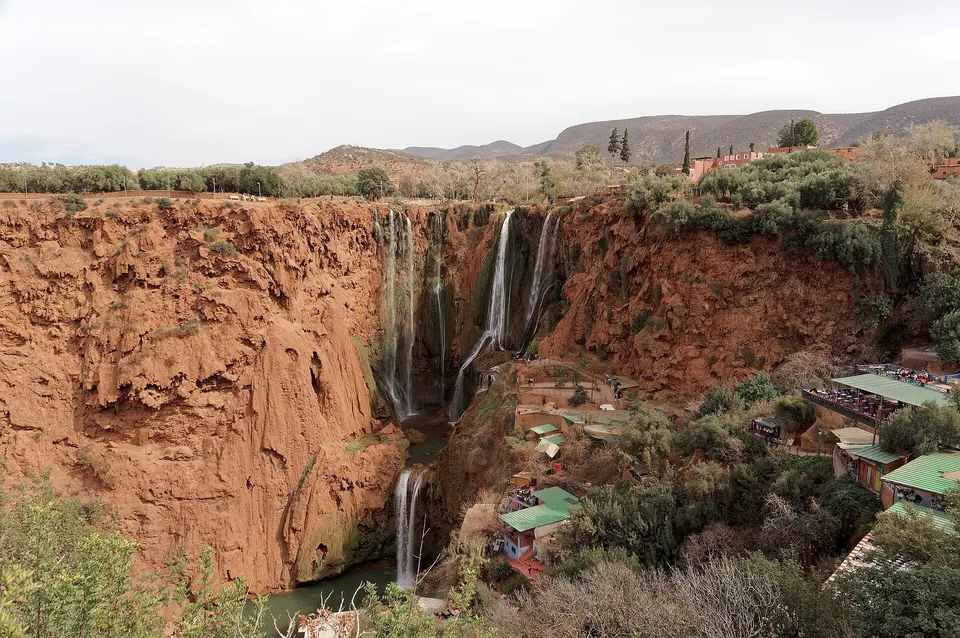
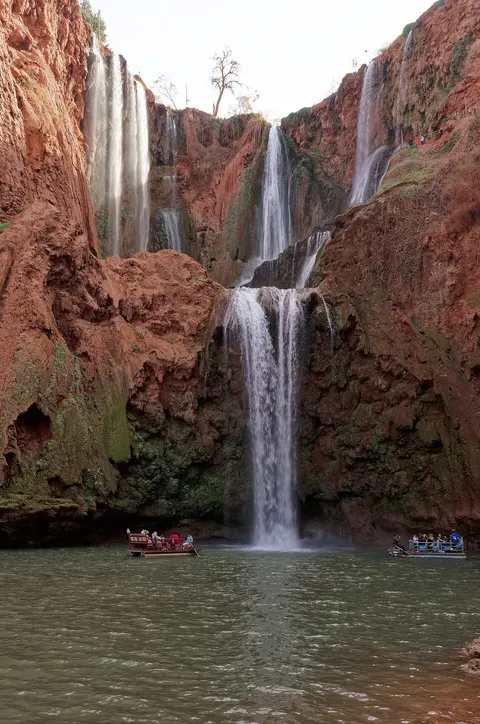
Around the falls, a small population thrives in the thuya forest that covers the valley, according to the M’Goun Geopark tourist guide. The site is classified as a Site of Biological and Ecological Interest (SIBE), a Moroccan protected-area status; the same guide lists Barbary macaques and bats among the species it shelters.
An endangered species
The Barbary macaque is on the IUCN Red List in the ‘endangered’ category: English Wikipedia refers to the assessment by Wallis et al. published in 2020, and the species moved from ‘vulnerable’ to ‘endangered’ in 2008. It is also on Appendix I of CITES, the strictest level of protection for international trade.
Population figures vary by source: more than 22,000 animals estimated in 1977, about 10,000 in 2005, and 10,000 to 12,000 in Morocco today according to French Wikipedia. The threats cited: destruction of the forest, competition from farming and livestock, and the capture of young animals for sale (about 300 infants taken from their mothers each year in Morocco, according to the same source).
Can you feed the monkeys at Ouzoud?
No. Researchers from Durham University describe seeing tourists at Ouzoud giving the monkeys crisps supplied by their guide, right next to a ‘do not feed the monkeys’ sign. The Routard recommends watching them without feeding them, to preserve their natural behaviour. None of the sources consulted cites a law specific to Ouzoud or a fine: the rule on site rests on the sign.
The effect of this feeding has been measured. Abderrazak El Alami and Abderrahman Chait followed a group of Ouzoud macaques from 2007 to 2012: human food takes up 21% of its feeding time, against 27% for leaves and 17% for grasses. As Marrakech Private reads it, about 13% comes directly from visitors and 8% from bins. The authors note that this extra food reduces the share of natural foods (grasses, seeds, acorns) and changes the time the monkeys spend on the ground. Wikipedia also cites a 2008 study of a tourist-visited group in the central High Atlas: it rested and behaved aggressively more often, and foraged less.
A study carried out in Ifrane national park (not at Ouzoud) found higher stress hormone levels and coats in poorer condition in groups fed by tourists.
Behaviour: what to know before your visit
The Ouzoud macaques readily approach visitors. A monkey that has learnt to associate people with food no longer asks, it takes: bags, bottles, anything held in your hand. That is how most bites happen. The advice that keeps coming up in the sources:
- keep food in a closed bag, especially on the path;
- stay a few metres away and don’t hold anything out;
- show any bite or scratch from a wild primate to a doctor.
As for photos, the macaques kept on leads in Jemaa el-Fna square, in Marrakech, are often young animals taken from the wild: a survey of 513 visitors published in 2018 found that 80% of them did not know this practice is illegal. At Ouzoud, the monkeys are free: that is where to photograph them.
Where and when to see them
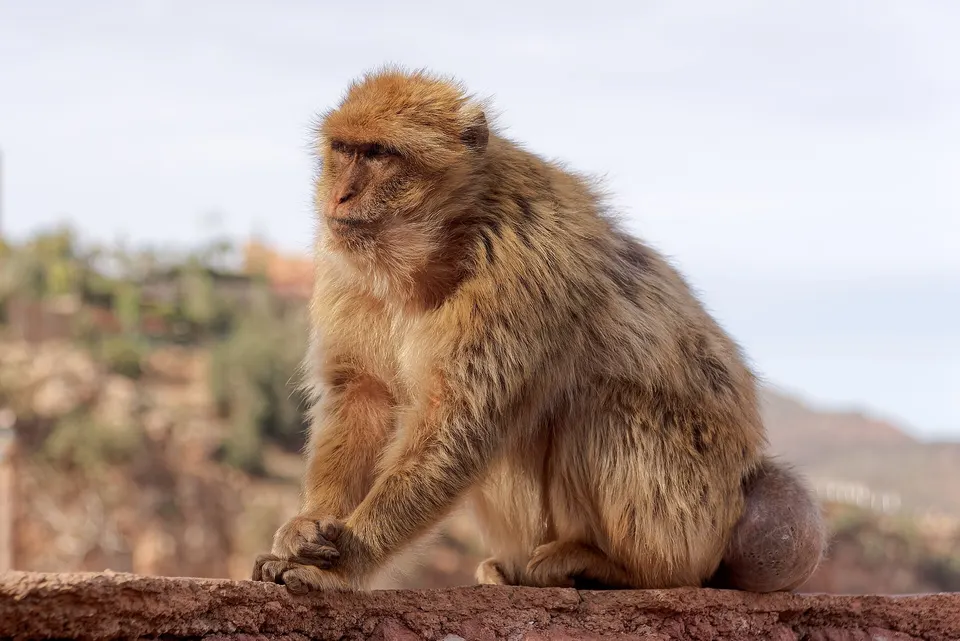
No guide or ticket needed. The monkeys gather on the path that goes down from the top of the falls to the pools, in the olive trees, and around the café terraces at the bottom. The route is described in detail on the page hiking and trails at Ouzoud.
They are there all year round, but the crowds change everything: one hiker notes on Komoot that from 9 am the tourist coaches arrive one after another. If you want to watch them in peace, come early or stay overnight. The day trips from Marrakech arrive after about three hours on the road; the best seller on GetYourGuide (guided hike, boat trip and lunch) is listed from €15.10 per person (checked on 26 November 2026).
For the rest of the visit (shoes, children, timing), see Ouzoud Falls tips and the best time to visit Ouzoud.
Other waterfalls to see
Ouzoud is not the country’s only waterfall: Setti Fatma, Akchour and Imouzzer are covered in the overview of Morocco’s waterfalls.
Book a trip
Ouzoud Falls day trips from Marrakech
 Ouzoud Waterfalls: Guided Hike, Boat Ride & Monkeys (Free Hotel Pickup)10 hours★ 4.8 (129 reviews)from €15Check availability
 PopularMarrakech: Ouzoud Falls Guided Hike, Boat Ride and Lunch11 - 12 hours★ 4.6 (41346 reviews)from €15.10Check availability
 Marrakech: Ouzoud Waterfalls, Guide, Boat & Optional Lunch10 hours - 1 day★ 4.8 (7032 reviews)from €12.60Check availability
"From" prices checked on 26 November 2026 and may have changed.
Affiliate links: CascadedOuzoud.com earns a commission if you book, at no extra cost to you. "Show live prices" loads the GetYourGuide module, which sets its own cookies (learn more (in French)).
Frequently asked questions
Can you feed the monkeys at Ouzoud?
No. A sign on the site asks visitors not to feed the monkeys, and travel guides advise watching them without giving them anything: human food changes their diet and makes them bolder, to the point of biting.
Are the Ouzoud monkeys dangerous?
They are wild and used to visitors: those that have learnt to associate people with food snatch bags and bottles. A bite or scratch from a wild primate is a reason to see a doctor.
Where can you see monkeys in Morocco?
The Barbary macaque lives in the mountain forests of Morocco and Algeria, between about 800 and 2,200 m. Ouzoud Falls is one of the easiest places to see it, with no guide and no entrance fee.
When can you see the monkeys at Ouzoud?
All year round. There are plenty of them along the path during the day; in the morning, before the day trips arrive, the visit is calmer for them and for you.
Sources
Information checked against the sources below. Prices and opening times change: confirm before you go.
- Wikipedia (French), Barbary macaque, accessed 26 November 2026
- Wikipedia (English), Barbary macaque (IUCN status, Wallis et al. 2020), accessed 26 November 2026
- El Alami and Chait, Revue de primatologie, Barbary macaque diet at Ouzoud, accessed 26 November 2026
- Durham University, Why can't we stop feeding monkeys, accessed 26 November 2026
- Marrakech Private, the Barbary macaques of Ouzoud, accessed 26 November 2026
- Routard, Ouzoud waterfalls, accessed 26 November 2026
- Wikipedia (French), Ouzoud waterfalls, accessed 26 November 2026
- Tourist guide to Ouzoud Falls, Tourisme durable Suisse Maroc (2023 edition), accessed 26 November 2026
- Komoot, View of the Ouzoud Waterfalls (hikers' tips), accessed 26 November 2026