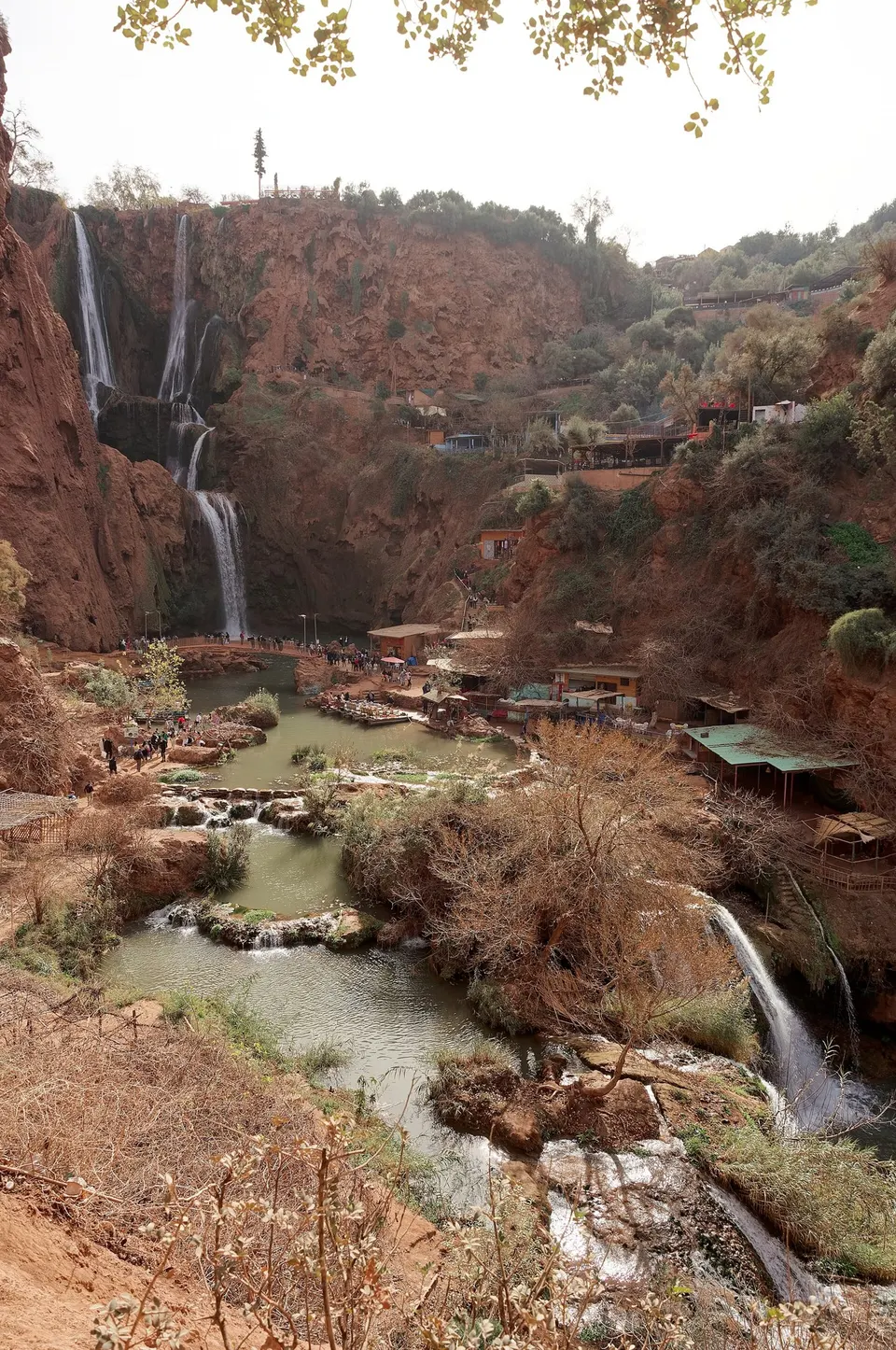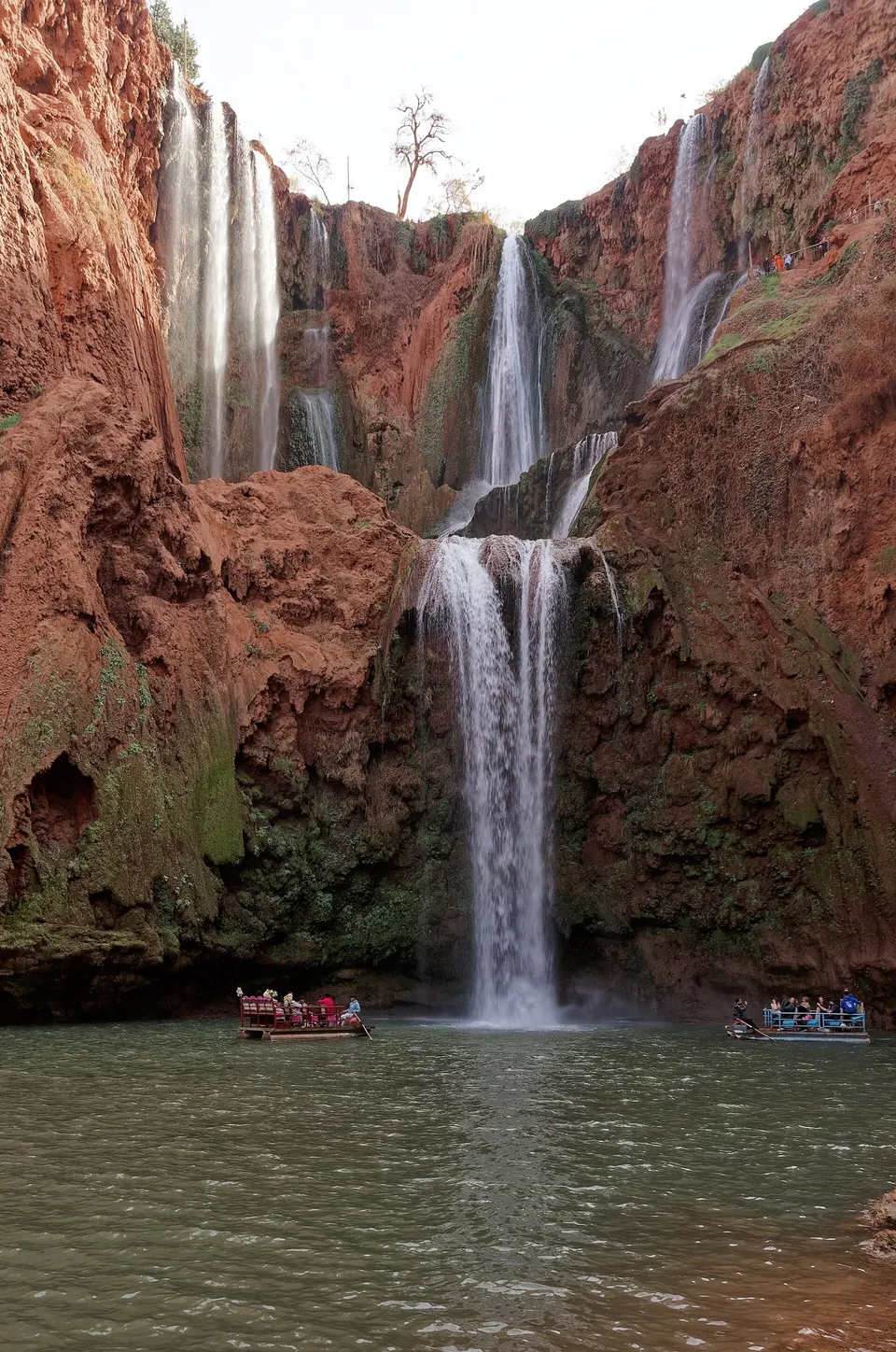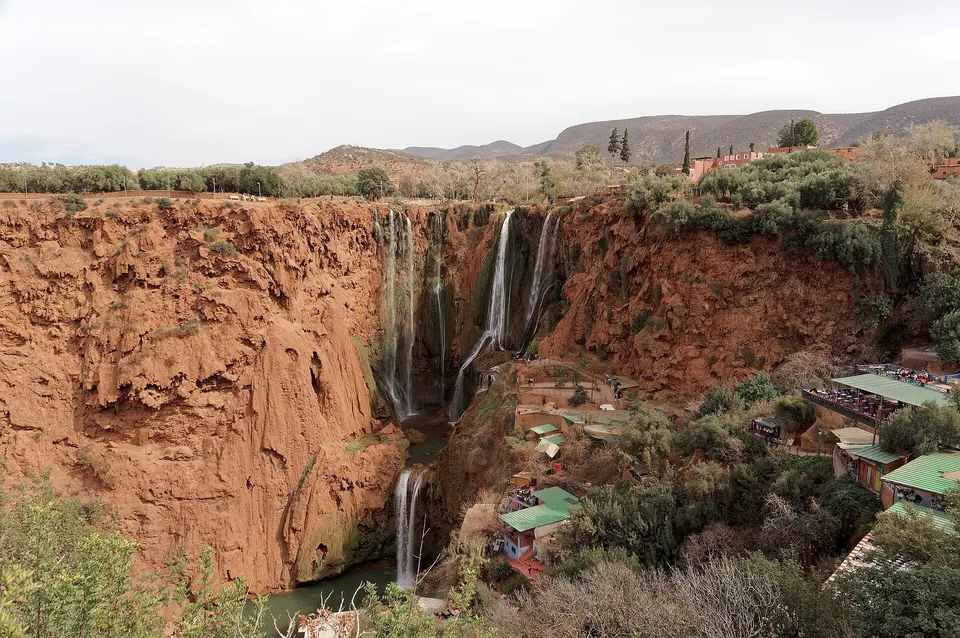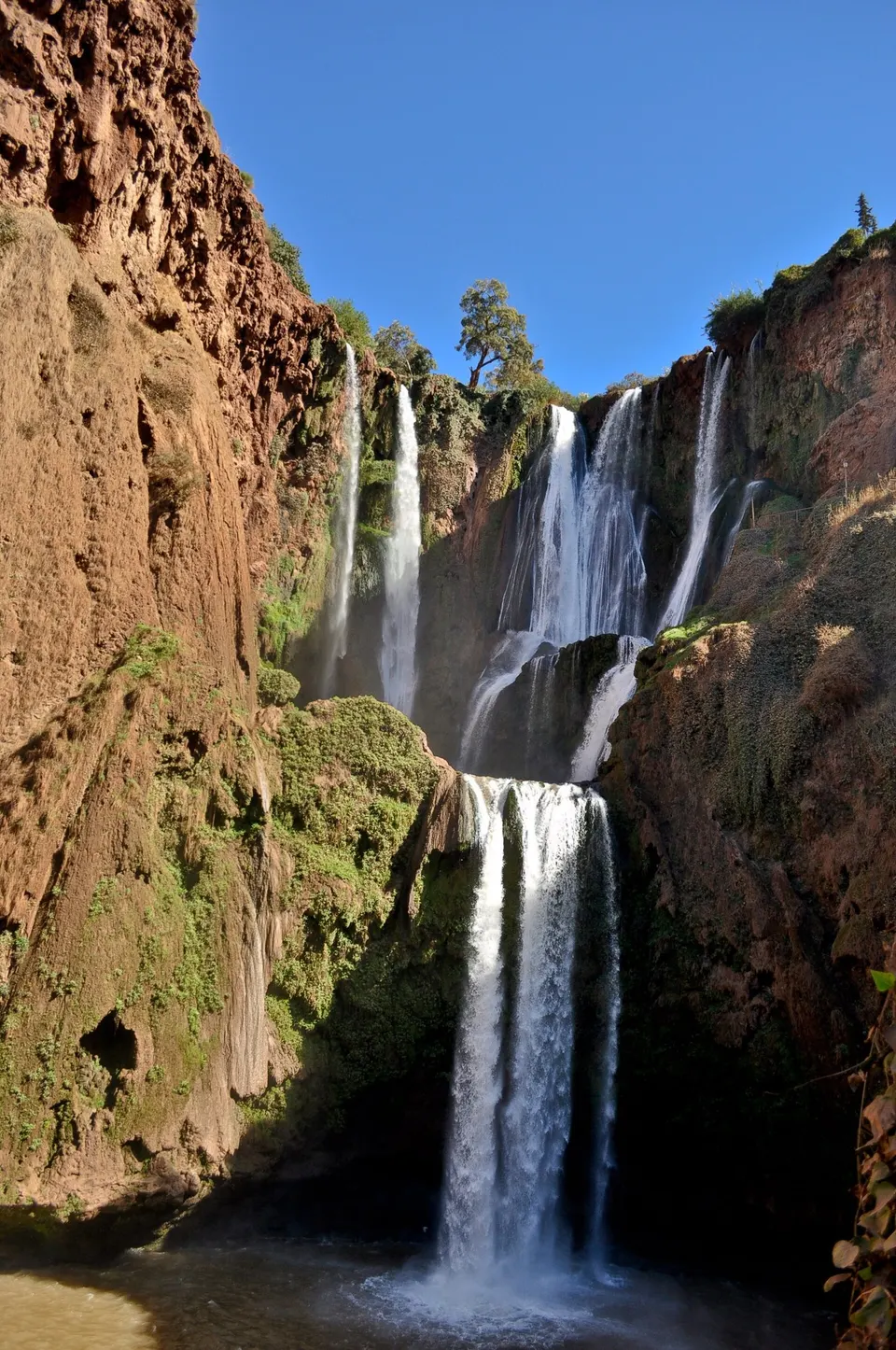
The flow at Ouzoud Falls depends on rainfall: the Routard says it peaks in spring, Morocco Escape from April to June, and it drops in summer. At the falls, average highs rise from 18°C in January to 37°C in July and August, and most of the rain falls from November to April, peaking in March (89 mm), according to Open-Meteo data for 2016-2025. Summer is the busiest season, and also the swimming season, and crowds peak around midday in every season. Moroccan school holidays (five weeks of eight days in 2026-2027) and weekends bring more domestic visitors: on a weekday, early in the morning, between March and May, you get the best balance.
Key facts
- Highest flow in spring (Routard), from April to June according to Morocco Escape; reduced from July to September.
- Average highs from 18°C in January to 37°C in July; 89 mm of rain in March, 3 mm in July (Open-Meteo, 2016-2025).
- Crowds in summer and around midday: arrive early, preferably on a weekday.
- State school holidays 2026-2027: 6 to 13 December, 24 to 31 January, 21 to 28 March, 9 to 16 May.
- Google searches peak from January to April: 14,800 a month against 9,900 the rest of the year.
Key facts
| Month | Average high | Average low | Rain | Flow and crowds according to the sources |
|---|---|---|---|---|
| January | 18.3°C | 3.5°C | 33 mm | moderate flow, few people; holidays 24 to 31 |
| February | 19.8°C | 5.0°C | 57 mm | moderate flow, few people |
| March | 20.7°C | 6.7°C | 89 mm | moderate flow, few people; holidays 21 to 28 |
| April | 23.8°C | 9.8°C | 62 mm | highest flow |
| May | 28.2°C | 13.3°C | 38 mm | highest flow; holidays 9 to 16 |
| June | 32.0°C | 16.8°C | 8 mm | end of the highest-flow period |
| July | 37.2°C | 20.8°C | 3 mm | reduced flow, big crowds |
| August | 37.1°C | 21.0°C | 5 mm | reduced flow, big crowds |
| September | 31.9°C | 17.1°C | 15 mm | reduced flow |
| October | 28.0°C | 13.5°C | 34 mm | rain returns, second flow peak |
| November | 22.3°C | 8.2°C | 39 mm | second flow peak, fewer people than in spring |
| December | 19.0°C | 5.1°C | 48 mm | moderate flow; holidays 6 to 13 |
Source: temperatures and rainfall calculated on 26 November 2026 from the Open-Meteo archive (2016-2025 averages, point 32.0154 N, 6.7192 W, model altitude 759 m, lower than the top of the falls); flow and crowds according to Morocco Escape, the Routard and Memphis Tours; state school holidays 2026-2027 according to Le360.
The flow: a question of rain
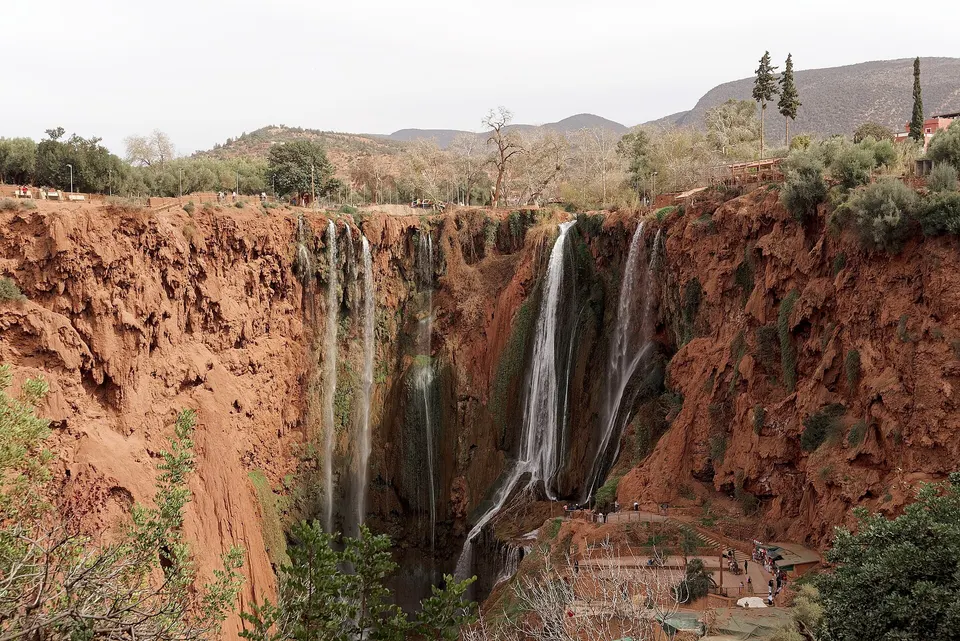
Ouzoud Falls are fed by a mountain river: their flow follows the rain that has fallen on the Atlas. The Routard puts the highest flow in spring, with lush vegetation; Morocco Escape details a peak flow from April to June, a second peak in October and November, a moderate flow from December to March and a reduced one from July to September. Memphis Tours, on the contrary, sees winter as the season of greatest volume, after the rains: in every case, the flow follows the rain of the previous weeks.
Autumn can surprise you. On 20 October 2026, Le360 reported that after more than four hours of continuous rain over the municipality of Aït Taguella, the falls had regained ‘their natural splendour’ with an ‘exceptional’ flow, at the very start of the rainy season. Shipped Away, who came in March, found the water powerful enough to get soaked near the bridge. Conversely, at the end of summer the streams of water are thinner: none of the sources read mentions the falls drying up completely.
Temperatures: hot in summer, cool on winter nights
According to the Open-Meteo 2016-2025 averages at the falls, highs stay below 21°C from December to March and exceed 37°C in July and August. Winter nights drop to around 3 to 5°C: bring a warm layer if you stay overnight (where to stay at Ouzoud). Spring (highs of 21 to 28°C from March to May) and autumn (28 to 22°C from October to November) are the most comfortable seasons for the walking loop and the hikes around the falls. These figures come from a weather model set at 759 m altitude, lower than the top of the falls (1,060 m according to Wikipedia): on the plateau, actual temperatures may be a little lower.
Crowds: summer, midday, weekends and holidays
Summer is the busiest period according to the Routard and Journal of Nomads, which also see it as the best season for swimming. All year round, the crowds arrive with the day-trip minibuses, around midday: Journal of Nomads advises arriving early, Memphis Tours at dawn and on a weekday. Shipped Away, who came at sunrise, had the falls to themselves. Memphis Tours also notes fewer people in winter and during Ramadan, with restaurant hours sometimes reduced.
Moroccan school holidays bring domestic families: Le360 linked the visitor numbers of October 2026 to the holidays. For 2026-2027, the state school holidays, eight days each, fall on 6 to 13 December 2026, 24 to 31 January, 21 to 28 March and 9 to 16 May 2027 (Le360). Major fixed-date public holidays add to them, such as Throne Day (30 July) or the Green March (6 November). If you can only come at a weekend or during those weeks, set off first thing.
Swimming: summer only, and not everywhere
Journal of Nomads keeps swimming for summer, the water being too cold in winter; Shipped Away describe it as cold and often brown after rain. Mind the rules: on 26 June 2026, Aujourd’hui le Maroc reported a rise in drownings in the lower pool in May and June, a strict ban on swimming in certain areas, signs and an awareness officer. The places where you can swim are described in boat and swimming at Ouzoud.
Why everyone looks up Ouzoud in winter
Google searches in France for ‘cascades d’Ouzoud’ peak from January to April, at 14,800 a month, against 9,900 the rest of the year (Google Ads, November 2025 to October 2026). If you are going at those times, book your Ouzoud day trip a little in advance and read our tips for preparing your visit.
Book a trip
Book a trip to Ouzoud
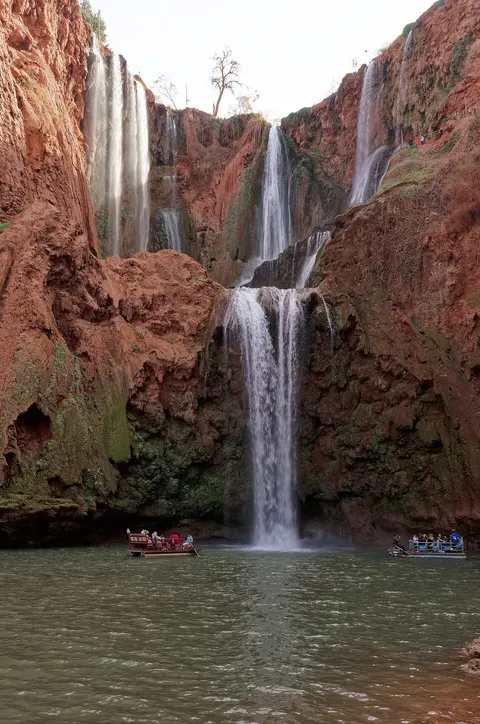 PopularMarrakech: Ouzoud Falls Guided Hike, Boat Ride and Lunch11 - 12 hours★ 4.6 (41346 reviews)from €15.10Check availability
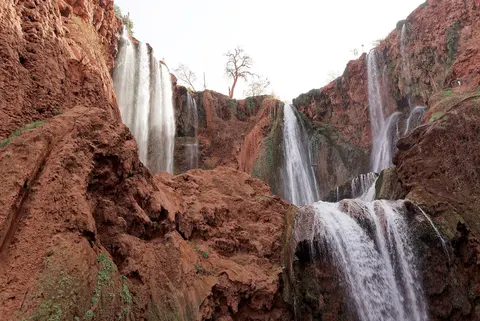 From Marrakech: Ouzoud Waterfalls Guided Tour & Boat Ride10 - 11 hours★ 4.6 (10295 reviews)from €10.20Check availability
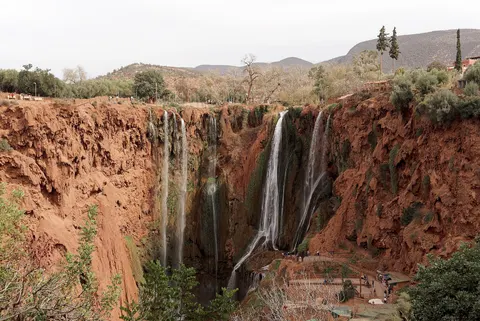 Marrakech: Ouzoud Waterfalls, Guide, Boat & Optional Lunch10 hours - 1 day★ 4.8 (7032 reviews)from €12.60Check availability
"From" prices checked on 26 November 2026 and may have changed.
Affiliate links: CascadedOuzoud.com earns a commission if you book, at no extra cost to you. "Show live prices" loads the GetYourGuide module, which sets its own cookies (learn more (in French)).
Frequently asked questions
When is the best time to visit Ouzoud Falls?
Spring, when the flow is strongest according to the Routard and highs stay between 21 and 28°C (Open-Meteo, March to May). Come early in the morning and on a weekday to avoid the crowds.
Do Ouzoud Falls dry up in summer?
None of the sources read mentions the falls drying up, but the flow is reduced from July to September according to Morocco Escape. One spell of rain in October 2026 was enough to give the falls an ‘exceptional’ flow again, according to Le360.
What is the weather like at Ouzoud Falls in winter?
Mild by day, cool at night: highs of 18 to 19°C and lows of 3 to 5°C from December to February on average (Open-Meteo, 2016-2025). Memphis Tours sees it as the quietest season, with plenty of water after the rains.
Can you swim at Ouzoud in spring?
The water is cold outside summer, according to Journal of Nomads, which keeps swimming for the hot season. It is forbidden in some areas, and drownings were reported in May and June 2026.
Sources
Information checked against the sources below. Prices and opening times change: confirm before you go.
- Routard, Ouzoud waterfalls, accessed 26 November 2026
- Morocco Escape, day trip to Ouzoud Falls from Marrakech, accessed 26 November 2026
- Open-Meteo, historical weather archive (2016-2025 averages calculated at the falls), accessed 26 November 2026
- Le360, exceptional flow at Ouzoud Falls (20 October 2026), accessed 26 November 2026
- Le360, school holidays and public holidays in Morocco 2026-2027, accessed 26 November 2026
- Journal of Nomads, How to visit the Ouzoud Waterfalls (March 2025), accessed 26 November 2026
- Memphis Tours, The Ouzoud Waterfalls, accessed 26 November 2026
- Shipped Away, Ouzoud Waterfalls (updated May 2026), accessed 26 November 2026
- Aujourd'hui le Maroc, drownings at Ouzoud Falls (26 June 2026), accessed 26 November 2026
- Wikipedia (French), Ouzoud waterfalls, accessed 26 November 2026
- Google Ads, Keyword Planner (volumes Nov. 2025 to Oct. 2026), accessed 26 November 2026